Overview
In Hindu tradition, certain temples are considered especially auspicious for couples to visit before or after marriage. Devotees seek blessings for a happy, prosperous, and lasting union. These temples are often associated with divine couples (such as Shiva–Parvati, Vishnu–Lakshmi, or Rama–Sita) or with deities believed to remove obstacles and grant harmony in married life. Many are linked to legends of divine weddings or to rituals that symbolise the wish for a suitable life partner.
Significance
Visiting these temples as a couple or before wedding ceremonies is thought to invoke divine grace for the marriage. Practices may include offering prayers, performing special pujas (such as Kalyana Prathanai or garland offerings), circumambulating the sanctum, or returning garlands to the temple once marriage is fixed. Regional and family customs vary; some couples visit one or two key temples, while others undertake a short pilgrimage covering several such sites. Combining temple visits with the recommended Swayamvara Parvathi Homam is widely considered beneficial for those facing delays or obstacles in marriage.
Pooja to be done
As a pooja to help remove obstacles to marriage or to bless the union, the Swayamvara Parvathi Homam is widely recommended. It is a Vedic fire ritual dedicated to Goddess Parvathi (in her Swayamvara form) and Lord Shiva, and is said to be effective for those seeking a life partner or facing delays in marriage. It can be performed at certain temples or at home with the guidance of a qualified priest. Details are given on our Traditions – Homam page.
Temples
Below are two well-known temples in South India visited by those seeking marriage blessings or a suitable life partner. Both have strong associations with divine marriage and specific worship practices.
Kalyana Sundareswarar Temple, Thirumanancheri
Location: Thirumanancheri (near Kumbakonam), Tamil Nadu.
The temple offers special poojas to help devotees find their life partner. Among them is the Kalyana Prathanai. Participants receive a garland, which is returned to the temple as an offering once their marriage is fixed.
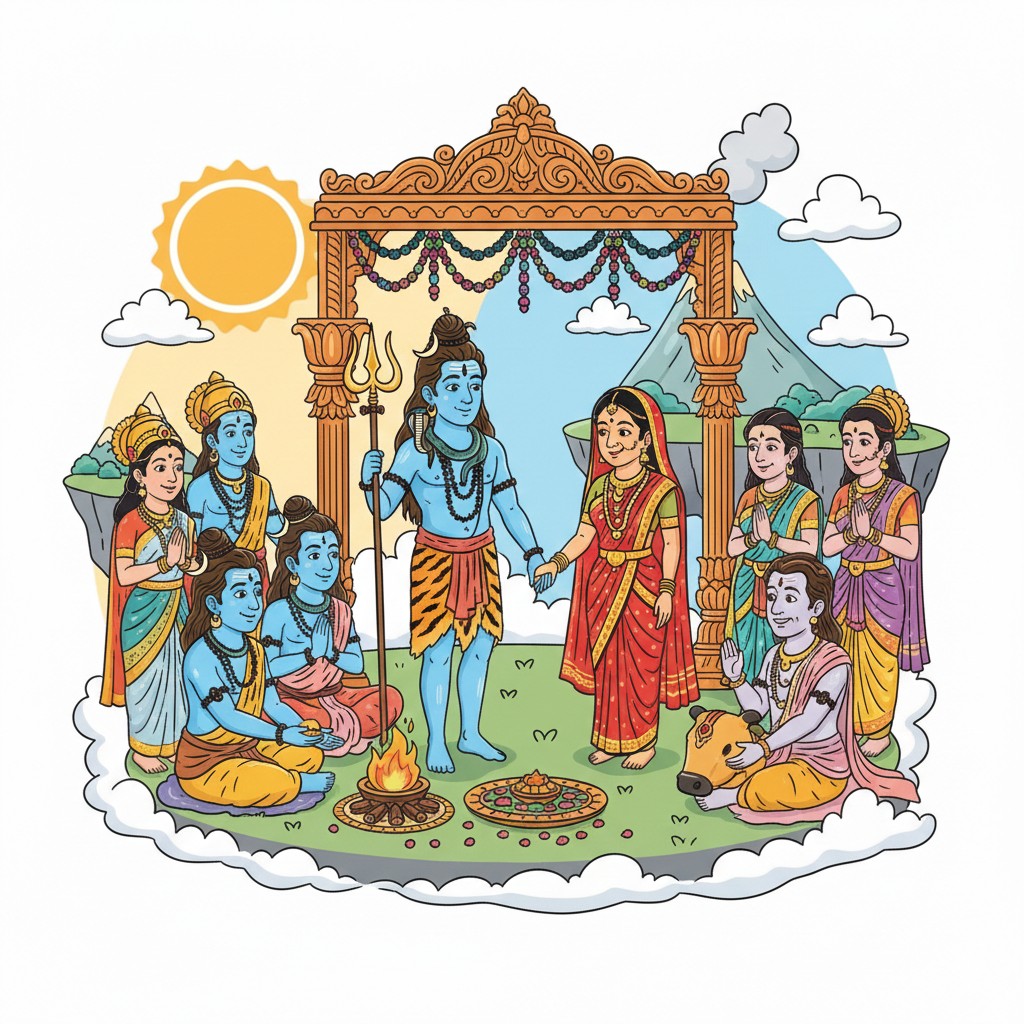
The legend of Thirumanancheri: Parvathi wished to marry only Shiva. After intense meditation, her prayers were answered. The place of her meditation came to be known as Thirumanancheri, where the divine marriage took place. In Tamil, “thirumanan” means marriage and “cheri” means a village—thus Thirumanancheri refers to the place where marriages take place. Shiva, in the form of Kalyanasundareswarar, married Parvathi, who is addressed here as Kokilambal (in Sanskrit, “kalyana” means marriage and “kokila” the nightingale). Lord Shiva is also known as Udhavaganathar here. The divine couple is addressed as “Arul Vallal” and “Kuyilinmenmozhiammai”; the goddess is also called Parvathasundari. The temple is also known as Udhavaganathar temple.
Nithyakalyana Perumal Temple
Location: Thiruvidandai, Chengalpattu district (on the East Coast Road, about 38 km from Chennai), Tamil Nadu.
Following the legend of Nithyakalyana Perumal, where Lord Vishnu is believed to marry daily, the temple is frequented by people seeking marriage or whose marriage is delayed. It is one of the 108 Divya Desams; the Lord is worshipped here as Nithyakalyana Perumal (Varaha) and his consort as Komalavalli Thayar. A common worship practice is to offer garlands to the presiding deity, wear the garland, and circumambulate the temple nine times.