1. Spiritual Essence of Vaikunta Ekadashi & Margazhi
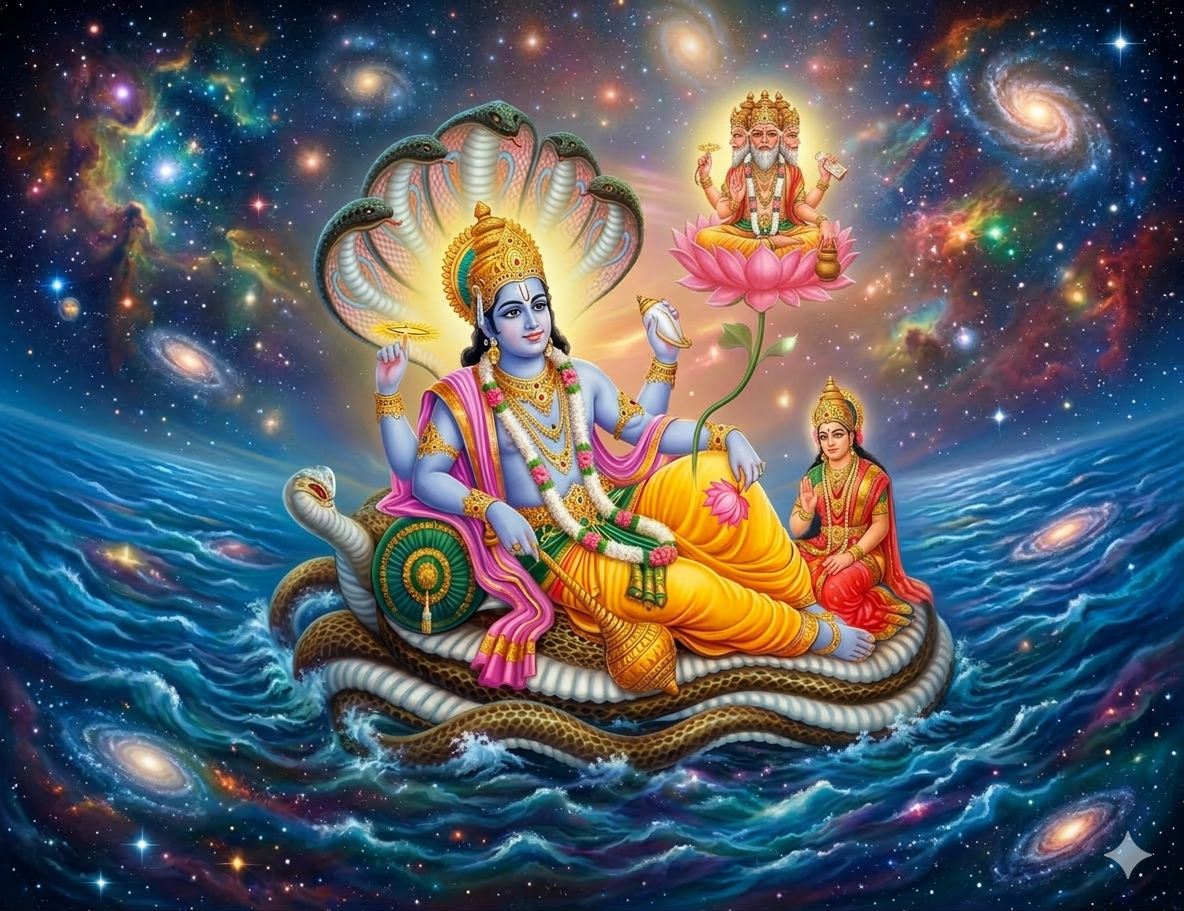
Vaikunta Ekadashi (known in North India as Mokshada Ekadashi and in Kerala as Swargavathil Ekadashi) is the most revered of all twenty-four lunar Ekadashis in the Hindu calendar. Falling on the 11th waxing lunar day (Shukla Paksha Ekadashi) during the solar month of Margazhi (Dhanur Masa / Margashirsha, mid-December to mid-January), it is dedicated to Lord Maha Vishnu (Sriman Narayana) and marks the opening of the celestial gates of His eternal abode, Sri Vaikunta.
In the Bhagavad Gita (Chapter 10, Verse 35), Lord Krishna proclaims to Arjuna: “Bṛhatsāma tathā sāmnāṃ gāyatrī chandasām aham | Māsānāṃ mārgaśīrṣo’ham...” (“Among Vedic hymns I am the Brihat Sama; among meters I am the Gayatri; and among all months of the year, I am Margashirsha [Margazhi]”). Moreover, this exact Shukla Ekadashi is celebrated as Gita Jayanti—the day Lord Krishna imparted the immortal wisdom of the Bhagavad Gita on the battlefield of Kurukshetra.
2. Paramapada Vasal (Vaikunta Dwaram): The Gate of Heaven
The defining ritual of Vaikunta Ekadashi in all 108 Divya Desam and Sri Vaishnava temples is the ceremonial opening of the Paramapada Vasal (in Tamil), Vaikunta Dwaram (in Telugu and Sanskrit), or Swargavathil (in Malayalam)—the sacred northern gateway of the temple inner enclosure.
This northern gate remains shut for 355 days of the year and is thrown open during the auspicious pre-dawn hour of Brahma Muhurta on Vaikunta Ekadashi. As the processional deity (Utsava Murti) of Lord Vishnu—adorned in diamond or pearl armor (Vajra / Muthangi Kavacham)—passes through the threshold, hundreds of thousands of devotees walk through the gate chanting “Govinda! Govinda!” and “Om Namo Narayanaya!”
3. Puranic Legends: Ekadashi Devi & Madhu-Kaitabha
- The Liberation of Madhu and Kaitabha (Padma Purana): Two primordial demons, Madhu and Kaitabha, emerged from the earwax of Lord Vishnu during cosmic slumber and attempted to steal the Vedas from Lord Brahma. When Lord Vishnu vanquished them, His divine touch purified their souls and granted them entrance into Vaikunta on the 11th day of the waxing moon in Dhanur Masa. Overwhelmed by grace, they prayed: “O Lord! May anyone who walks through Your northern gate on this Ekadashi be freed from all sins and attain Paramapada (supreme liberation).”
- Manifestation of Ekadashi Devi vs. Demon Muran: When the fierce demon Muran (who dwelt in Tamasic grains and rice) disturbed the Devas, a radiant feminine power (Shakti) emerged from the eleven senses (five organs of perception, five organs of action, and the mind) of Lord Vishnu and slew Muran. Pleased, Vishnu named her Ekadashi and blessed that whoever abstains from grains and meditates upon Narayana on the 11th lunar day would conquer their own eleven senses and attain Moksha.
4. Margazhi Month: Thiruppavai, Thiruvempavai & Dawn Kolam
Because one human year equals a single day-and-night cycle for the celestial Devas, the month of Margazhi (December 16 – January 14) corresponds to the Brahma Muhurta (4:00 AM – 6:00 AM) of the gods, just before the sun begins its northward journey (Uttarayana on Pongal / Makar Sankranti). For this reason, earthly weddings are set aside during Margazhi so the entire month is devoted purely to the Divine:
- Andal’s Thiruppavai (30 Pasurams): Every morning for the 30 days of Margazhi, devotees in Vishnu temples and homes sing one verse from the Thiruppavai, composed by Sri Andal (the only female Alvar saint), awakening fellow devotees at dawn to seek eternal service at the lotus feet of Lord Narayana.
- Manikkavacakar’s Thiruvempavai & Arudra Darshanam: Simultaneously, in Shiva temples across Tamil Nadu, devotees chant the 20 verses of Thiruvempavai and 10 verses of Thiruppalliezhuchi composed by the Shaiva saint Manikkavacakar, culminating on the full moon of Margazhi (Thiruvathirai / Arudra Darshanam) honoring Lord Nataraja at Chidambaram.
- Margazhi Kolam with Pumpkin Flowers: At dawn, women wash the entrance threshold and draw large, intricate geometric rice-flour Kolams (mandalas), placing a bright yellow pumpkin blossom (Poosani Poo) set in a small ball of sacred cow dung at the center to invite auspiciousness and health.
5. Srirangam, Tirupati & Divya Desam Celebrations
- Sri Ranganathaswamy Temple, Srirangam (Trichy, Tamil Nadu): The foremost of the 108 Divya Desams (Bhooloka Vaikuntam — “Vaikunta on Earth”). Srirangam celebrates a grand 21-day Vaikunta Ekadashi festival divided into Pagal Pathu (10 daytime festival days) and Raa Pathu (10 nighttime festival days), during which the 4,000 Tamil verses of the Nalayira Divya Prabandham are chanted with dramatic gesture (Araiyar Sevai), peaking with the opening of the Paramapada Vasal on Vaikunta Ekadashi dawn.
- Sri Venkateswara Swamy Temple, Tirumala Tirupati (Andhra Pradesh): At Tirupati, the inner sanctum’s Vaikunta Dwaram encircling the main shrine is opened on Vaikunta Ekadashi and remains open through Dwadashi (for 10 sacred days), accompanied by the procession of the Golden Chariot (Swarna Ratham) and Chakra Snanam in the Swami Pushkarini tank.
- Sri Parthasarathy Temple (Triplicane, Chennai) & Kanchipuram Varadaraja Perumal: Famous across Tamil Nadu and Kanchipuram for pre-dawn Paramapada Vasal darshan.
6. Ekadashi Fasting Rules, Mantra & 2026 Dates
- Abstaining from Rice & Grains: From sunrise on Ekadashi until sunrise on Dwadashi (the 12th day), devotees abstain from rice, wheat, lentils, and heavy tamasic foods. Those unable to observe a waterless fast (Nirjala) partake in milk, fruits, nuts, or sabudana/buckwheat (Phalahara).
- Night Vigil (Jagarana) & Chanting: Staying awake singing the Vishnu Sahasranama, Narayana Kavacham, or the Ashtakshari Mantra (Om Namo Nārāyaṇāya) and reading the Bhagavad Gita.
- Dwadashi Parana (Breaking the Fast): On the next morning (Dwadashi), the fast is traditionally broken after early morning puja with Agathi Keerai (hummingbird tree greens), Nellikai (Indian gooseberry / Amla), and Sundaikkai cooked in sattvic style.
| 2026–2027 Date | Observance | Key Details & Timings |
|---|---|---|
| Wednesday, December 16, 2026 | Margazhi Month Begins (Dhanur Sankranti) | Start of daily dawn Thiruppavai & Thiruvempavai recitations across South India. |
| Sunday, December 20, 2026 | Vaikunta Ekadashi / Mokshada Ekadashi & Gita Jayanti | Pre-dawn opening of Paramapada Vasal (Vaikunta Dwaram) at Srirangam, Tirupati, and Divya Desams; Ekadashi Tithi lasts until 8:14 PM IST. |
| Monday, December 21, 2026 (Morning) | Vaikunta Dwadashi (Parana / Breaking the Fast) | Auspicious Dwadashi Parana window in the morning (7:10 AM – 9:13 AM IST); Chakra Snanam at Tirumala. |
| Thursday, January 14, 2027 | Bhogi / Conclusion of Margazhi & Kudarai Vellum (Day 27) | Conclusion of the 30-day Margazhi Pavai Nombu, leading into Thai Pongal / Makar Sankranti (Uttarayana). |
7. Frequently Asked Questions
When is Vaikunta Ekadashi in 2026?
In 2026, Vaikunta Ekadashi (also observed as Mokshada Ekadashi and Gita Jayanti) falls on Sunday, December 20, 2026, with the Dwadashi fast-breaking (Parana) on the morning of Monday, December 21, 2026.
Why do we avoid rice on Vaikunta Ekadashi?
Scripturally, the demon Muran (representing Tamas and spiritual lethargy) was permitted to dwell in rice and grains specifically on the day of Ekadashi. Physiologically and yogically, around the 11th lunar day the Moon’s gravitational pull influences bodily fluids and digestion; keeping the stomach light with fruits or water elevates mental clarity for meditation and chanting.
What is Kudarai Vellum (Day 27 of Margazhi)?
On the 27th day of Margazhi, devotees sing the 27th pasuram of Sri Andal’s Thiruppavai (“Kudarai Vellum Seer Govinda”), celebrating the fulfillment of her vow where she describes offering creamy Akkara Adisil (rich rice pudding slow-cooked in milk, jaggery, and overflowing ghee) to Lord Ranganatha.